

Maximising nitrogen use efficiency in potatoes
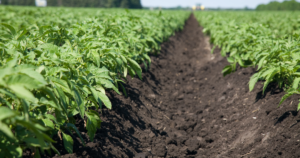 With crop protection options narrowing, seasons becoming less predictable and margins under pressure, maximising nitrogen use efficiency (NUE) in potatoes has never mattered more.
For potato growers, the goal is not simply to push yield with more nitrogen, as with most commercial crops, as excess nitrogen can affect tuber size distribution, dry matter, skin finish, maturity and overall marketability.
In potatoes, quality often matters more than output alone, with the best results coming from crops supplied with the right amount of nitrogen, at the right time, in the right form.
Why potatoes need a tailored nutrition strategy
NUE varies significantly between crops, with cereals typically utilising around 65% to 80% of applied nitrogen, while potatoes are often closer to 50% to 65%.
A major reason for this is rooting. For example, wheat produces a deep, fine and highly branched root system that can explore a large volume of soil, whereas potato roots are shallower, more concentrated in the ridge and less able to recover nitrogen once it has moved below the main rooting zone.
For that reason, timing, placement and nitrogen form are especially important factors in potato production.
Protecting the root zone
As potatoes rely on a relatively restricted root system, protecting rooting conditions is essential.
Compaction, poor soil structure and waterlogging all reduce root growth and limit the crop’s ability to access applied nitrogen, even if supply is adequate on paper.
Soil moisture can also influence nitrogen uptake; if soils are too dry, nutrient movement slows, and crop uptake is restricted. However, if soils are too wet, nitrogen is at greater risk of leaching.
For potatoes, this balance is especially important because shallow rooting leaves less margin for error, so careful irrigation and moisture management play a vital role in improving NUE.
Match nitrogen to crop demand
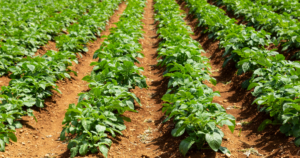 Potatoes begin actively taking up nitrogen later, with demand building through canopy development, peaking around June and July before continuing more gradually.
It’s important to be aware that different varieties can also change how and when the plant utilises nitrogen.
For example, earlier potato varieties generally have a shorter growing window and a shorter period of nitrogen uptake, while later maincrop varieties continue canopy growth and tuber bulking for longer, so nitrogen demand is spread over a longer period.
As potatoes typically require nitrogen later in the growing season, fertiliser strategy should be shaped around crop demand rather than the total rate alone.
Application tips to optimise NUE in potatoes:
- Avoid front-loading too much nitrogen – large early applications can drive excessive canopy growth and increase the risk of nutrient loss before the crop is ready to use it.
- Consider split applications where appropriate – dividing nitrogen can help improve availability during key growth stages and reduce waste.
- Focus on canopy development and tuber bulking – aligning supply with these periods helps improve uptake and supports crop performance.
Making fertiliser choice count
Nitrogen losses often occur because ammonium converts rapidly to nitrate, which is much more vulnerable to leaching after rainfall or irrigation.
For shallow-rooted crops such as potatoes, that nitrate can quickly move beyond the effective rooting zone.
Using a fertiliser like OCI’s Nutramon Care that contains a nitrification inhibitor, helps nitrogen remain in the ammonium form for longer can improve retention in the upper soil layers.
Beyond product choice, application quality also matters. Make sure spreading is even and accurate, avoid overlap and misses and match product choice to field conditions to optimise NUE.
Monitor NUE throughout the season
NUE should not rely entirely on decisions made at planting, in-season monitoring is vital to keep the crop on track and support informed adjustments.
Techniques such as tissue testing, crop walking and canopy assessment can help show whether nitrogen supply is matching crop demand, allowing growers to fine-tune management and respond more effectively to crop needs.
For more about the tools available to monitor nutrient levels in the soil, read our recent blog.
Improving NUE for better returns
When nitrogen is managed well in potatoes, the benefits go beyond uptake alone. Improved efficiency can help deliver:
- Better nutrient availability throughout the season
- Lower nitrate losses
- Reduced environmental impact
- Stronger crop performance
- Improved marketable yield and margin potential
In potatoes, more nitrogen is not always better. A balanced, well-timed approach is far more likely to deliver the quality, consistency and profitability growers need.