



Autumn update: Fertiliser planning for a changing season
 With this year’s dry summer bringing early harvests and pushing drilling dates forward, many arable farmers are rethinking their nutrient strategies for autumn 2025.
Warwickshire farmer and independent agronomist, Will Oliver, shares his practical approach to fertiliser planning this season, with an emphasis on efficiency, soil health and margins.
Early drilling – opportunities and risks
Drier-than-usual conditions throughout summer 2025 meant harvest came in earlier than expected, allowing crops to be drilled ahead of schedule.
Will explains that while this creates opportunities for strong establishment, it also demands a sharper focus on nutrient management.
“Earlier drilling changes the rhythm of fertiliser planning. It’s about making sure crops get the right start, without pushing nutrients into dry soils where availability could be limited,” he says.
Oilseed rape – a renewed opportunity
After years of variable performance, oilseed rape (OSR) has been the stand-out crop for many UK growers this season.
“Yields across the UK have been strong, which is why I’ve drilled rape again for the first time in six years,” Will explains.
Many growers have moved away from growing the crop after establishment issues and problems with flea beetle, but an earlier drilling date means crops will be better able to combat these problems this year.
Early drilling in August has been key – giving crops a head start and improving establishment before flea beetle pressure builds.
Will is also experimenting with companion crops, such as buckwheat, clover and fenugreek alongside his OSR. These crops are known to support soil health, aid weed suppression and contribute to stronger crop resilience.
Learn more about the soil health and fertility benefits of companion crops.
From a nutrition perspective, phosphate and potash are critical to encourage rooting and early vigour in OSR crops.
Will advises growers to ensure these nutrients aren’t overlooked in autumn fertiliser planning, especially following early drilling when crops are developing quickly while soils remain warm.
Nutrient priorities for wheat
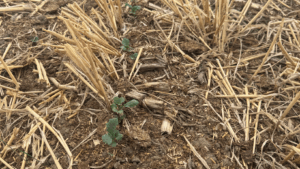 For winter wheat, Will’s focus is on getting crops away strongly to achieve optimal yields in 2026.
“The key priority is ensuring early nitrogen availability, balanced with phosphate and potash to drive rooting and tillering,” he notes.
He stresses that autumn nutrition should be tailored to soil reserves, with soil testing forming the foundation of decisions.
“You can’t manage what you don’t measure – soil testing tells you exactly where to target inputs.”
Maximising nitrogen use efficiency (NUE)
Will highlights a few practical steps to getting the most out of your nutrition this autumn:
- Soil testing – benchmark nutrient levels before making applications.
- Timing – avoid applying nitrogen ahead of heavy rain to minimise leaching.
- Splitting doses – consider smaller, more targeted applications, especially on lighter soils.
- Organic manures – integrate poultry litter or farmyard manures where available to improve soil organic matter (OM) along with adding nutrients.
By combining efficiency with innovation, arable farmers can navigate the pressures of input costs, weather and environmental expectations – while setting up crops for a successful season ahead.