


How to calibrate your fertiliser spreader correctly to optimise nitrogen use efficiency
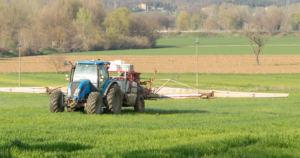 As we begin to plan spring fertiliser applications, it’s important to remember the value of adequately preparing equipment to ensure that nitrogen is spread across your crop efficiently and in the correct quantities.
In order to achieve this, the first crucial step is to calibrate your fertiliser spreader correctly.
Proper calibration reduces the risk of under or over-application of fertiliser, preventing waste and ensuring an optimised dose of nutrients is spread across the crop, allowing for efficient use of nutrients applied.
Here’s a reminder of the maintenance you should carry out to prepare your fertiliser spreader and maximise productivity:
1. Inspect the spreader
Thoroughly inspect your spreader prior to fertilisation and carefully check that the rate-setting mechanism works correctly and can be adjusted, the on/off switch is functioning and the distribution rotor/spinning discs are not worn and are operating properly.
2. Adjust to fertiliser type
Once you’ve inspected the spreader, adjust it to match the fertiliser you plan to use. The density, particle size, and flow rate of fertiliser varies from product to product, which affects the distance it is spread.
Denser granules will travel further than lighter ones, even if they are the same size.
This adjustment is especially important for rotary spreaders, which rely on centrifugal force to achieve the correct spreading width.
3. Perform tray tests
To ensure your settings are correct, it’s crucial to perform a full-width tray test ahead of applications.
The test checks that the spreader is accurately covering the desired area of the field, ensuring an even distribution to prevent any gaps or overlaps, which can cause inefficiencies in your application.
Read more about the risks of inaccurate fertiliser applications in our recent blog.
4. Set the correct height above the crop
 Once you have completed all the preliminary checks, the next stage is to ensure that your spreader is set at the correct height above the crop.
Getting this right is essential to ensure that the fertiliser will be spread precisely – you should always refer to the spreader manufacturer’s tables for specific height recommendations.
5. Adjust the angle of fertiliser discharge
Once the spreader is in the correct position above the crop, adjust the angle at which the fertiliser hits the disk to determine the desired spread pattern.
This step is crucial – if the angle is even slightly wrong, you risk leaving gaps in the crop or applying to the same area multiple times.
Once this is done, perform a final tray test to ensure your spreading pattern is correct before you begin spreading.
6. Post-spreading maintenance
Once you’ve finished your fertiliser application, don’t forget to clean your equipment thoroughly, ready for its next use.
Fertiliser can absorb moisture from the air, which may lead to corrosion if left in the spreader. If possible, dry the machine before storing it away to prolong its life and maintain its performance.
By taking the time to calibrate your spreader correctly, you’ll minimise wastage while improving nitrogen use efficiency, ensuring your crops get the precise nutrients required to aid the early growth stages.