
Why fertiliser origin should be part of the buying decision
As carbon reporting becomes a greater focus across UK food supply chains, growers are likely to face increasing demand for clear, accurate farm carbon data.
Much of this scrutiny will focus on visible on-farm practices, from cultivations and fuel use to nutrient planning. However, one area that can be harder to assess is the carbon footprint already built into bought-in inputs, like fertiliser.
For growers looking to understand and reduce the emissions linked to crop production, fertiliser origin is becoming an increasingly important part of the buying conversation.
Why fertiliser carbon footprint matters
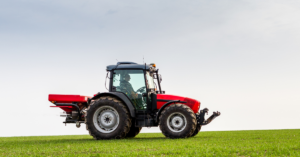
When growers buy fertiliser, the main questions are often around price, nutrient content and availability, these remain important, but they do not tell the full story.
Two products could supply very similar nutritional credentials, while carrying significantly different carbon footprints.
Sam Leadbeater, UK and Ireland sales manager at OCI Global, explains: “Two fertilisers can look identical on the shelf, but their production footprints can be vastly different depending on the site, the energy source used and the efficiency of the manufacturing process.”
This is why it is important to interrogate the supply chain to work out a product’s true emission history.
For more on why fertiliser carbon footprint matters, read our recent blog.
Understanding hidden emissions in fertiliser
Fertiliser can pass through several stages before it reaches the end user. It may be produced in one country, traded through another, imported, blended and then sold through a merchant.
At each stage, it can become harder for growers to see where the product has come from and how it has been produced. Without asking questions, the carbon footprint of that fertiliser remains unclear.
This matters because emissions linked to fertiliser production are part of the wider footprint of growing crops.
With food processors, retailers and supply chains requiring better carbon data, fertiliser origin could become an important part of demonstrating responsible input choices but the pressure needs to come from the end of the supply chain.
To learn more ways of lowering fertiliser carbon footprint without compromising yields, read our recent blog.
What growers should ask when buying fertiliser
Alongside price and availability, growers should ask their merchants where the product was produced, what energy source was used during production and if they can offer any information on the product’s carbon footprint.
These questions help make fertiliser origin part of the normal buying conversation. Over time, this creates more demand for transparent supply chains and lower-carbon product options. “Farmers have more influence than they realise,” says Mr Leadbeater.
“When they ask these questions consistently, it forces the wider industry to respond and encourages merchants, importers and blenders to prioritise products with stronger environmental credentials.”
Why production method matters
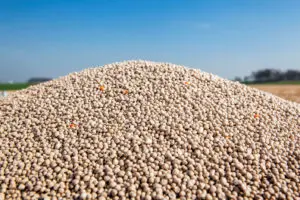
The way in which fertiliser is produced can have a major impact on its carbon footprint.
Nitrate fertilisers produced in efficient Western European facilities, particularly those using natural gas-based production and responsibly sourced ammonia, can offer lower-carbon options than products made using coal-based energy or less efficient ammonia production.
This is why origin and production method should be considered alongside nutrient value. A lower-carbon choice may not always be obvious from the product label alone, so traceability and supplier information become important.
OCI Global’s approach to responsible ammonia sourcing and product traceability is designed to give customers clearer
information on the origin and carbon footprint of the fertiliser they buy.
“Our calcium ammonium nitrate production has one of the lowest carbon footprints globally, based on standard production methods,” says Mr Leadbeater.
“This footprint can be reduced further when we produce using lower-carbon raw materials instead of natural gas.”
A practical first step towards decarbonisation
Reducing farm emissions can feel complex, particularly where higher-cost technologies or major system changes are involved, but fertiliser origin offers a practical starting point.
For growers, asking where fertiliser has come from helps identify whether the product supports their wider carbon goals. It also sends a signal through the supply chain that transparency matters.
“For growers looking to reduce emissions, asking where fertiliser has come from is a practical first step,” concludes Mr Leadbeater.
“The more that happens, the more pressure there is on the whole supply chain to be transparent and bring lower-carbon options through to farm.”