



Using green manures to reduce your crops’ carbon footprint
For growers under pressure to reduce their crop’s carbon footprint, using green manures alongside manufactured fertiliser can have a positive impact.
In conjunction with traditional fertilisers, organic matter, digestate, compost, green waste, and green manures can all contribute to more sustainable nutrient management.
However, their efficacy depends on how, where and when they are used. In most mainstream arable systems, they work best as part of a balanced programme rather than as a replacement for manufactured fertiliser.
What can green manures deliver?
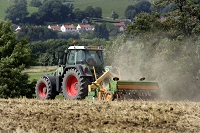 Species like clover, vetch, rye, oats or mustard can be sown as green manures following the main crop harvest and before the next crop is drilled.
They can also be undersown beneath a standing cereal crop or grown for a longer period as a fertility-building ley.
These crops are then terminated by methods such as mowing, rolling, grazing or cultivation to allow the plant material to be incorporated into the soil or left on the surface as a mulch, where it gradually decomposes.
Leguminous green manures such as clover and vetch work with soil bacteria to fix atmospheric nitrogen. Some of this nitrogen can become available to the following crop as the roots and foliage break down.
Non-leguminous crops such as rye, oats and mustard do not fix additional nitrogen, but they can capture the nutrients remaining in the soil to reduce losses over winter and return those nutrients alongside organic material when they decompose, increasing nitrogen use efficiency (NUE) and soil health for the next crop.
Building soil organic matter using these methods can improve soil structure, water infiltration and retention, nutrient availability and biological activity.
This also supports microbial life and helps soils retain nutrients more effectively, improving NUE of fertiliser applied later in the rotation.
These benefits are particularly valuable as UK growers manage increasingly unpredictable weather.
Soils with stronger structure and higher organic matter levels are generally better equipped to hold water during dry periods and reduce nutrient losses during heavy rainfall.
Are green manures enough alone?
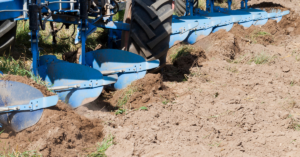 Despite the many benefits provided by green manures, their main limitation is reliability. Nutrients from green manures are released gradually and can be influenced by soil temperature, moisture, crop choice and timing.
Green manures build the baseline fertility, but they usually do not meet the immediate, high nutrient demands of crops such as wheat, barley and oilseed rape. These covercrops can also struggle to provide the volume and consistency of nutrients required across commercial arable systems.
Reducing manufactured fertiliser without accounting for crop demand can therefore be counterproductive and if nutrient supply falls short and yield declines, the carbon footprint per tonne of crop may actually increase because less food is produced from the same area of land.
A balanced approach to lower carbon crop nutrition
The strongest strategy is to use every nutrient source for the job it does best. Green manures can help build soil health, improve resilience and support nutrient cycling, and synthetic fertiliser can be used as targeted nitrogen alongside these to ensure crops have the nutrients they need in a consistent form.
This is where lower-carbon fertilisers can provide an even greater impact on a crop’s carbon footprint. OCI’s lower-carbon fertiliser products are produced using biomethane rather than fossil fuels, helping reduce emissions associated with manufacturing while continuing to provide reliable crop nutrition.
Products such as Nutramon Novo are designed to offer the same trusted nutrient performance as traditional fertilisers, but with a lower production footprint. Its 50% nitrate nitrogen and 50% ammonium nitrogen composition provides both rapid and longer-lasting nitrogen delivery.
Green manure crops are effective, but they are not a silver bullet. When used alongside a lower-carbon fertiliser, growers can protect yield and nutrient reliability while minimising carbon footprint.