



How to prepare dry soils for autumn drilling
As hotter, drier summers become more common, growers are being urged not to default to routine post-harvest corrections, but to assess soil condition and nutrient status field by field ahead of drilling.
Warwickshire arable farmer and BASIS-qualified agronomist Will Oliver, says prolonged dry weather has left soils in a very different position compared to a typical year, but in some cases, the outlook is better than growers might expect.
This year crops matured earlier, potentially shortening the period of active nutrient uptake, while the lack of rainfall limited opportunities for leaching and run-off, leaving more residual nitrogen in the soil.
At the same time, dry harvest conditions resulted in less machinery compaction on many farms, while natural cracking has opened channels to aid water infiltration within the soil when the rain arrives.
Instead of focusing on what you’ve done historically, or what others are doing, Will advises letting your soil dictate what action you take.
Will says: “Hard ground doesn’t automatically mean poor structure, just as an early harvest doesn’t automatically mean the same nutrient corrections will be needed as last year.
“The key this autumn is to use the extra time gained from an early harvest to assess fields individually before deciding whether cultivation, nutrient applications or pH correction are actually required.”
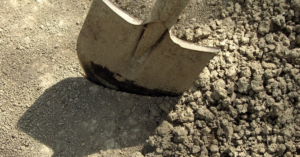 Assessing soil structure
Soils that have experienced drought can be extremely hard without necessarily being badly compacted, so avoid using surface condition alone to decide whether remedial cultivation is required.
Start with a spade and assess fields individually. Look at how easily the soil breaks apart, the size and shape of aggregates and any obvious compacted layers.
“If the soil around the spade wobbles, that’s a good indication the structure is still sound. If s
oils were in good condition before, there’s no reason to assume they won’t recover once moisture returns,” he says.
This is particularly important when considering subsoiling, Will advises avoiding deep cultivation simply because the ground feels hard.
“Deep cultivation in very dry soils will increase metal wear and machinery damage for little agronomic benefit. Where intervention is needed, light discing may be the better option to loosen the surface layers of soil.”
Checking soil nutrient status
The same evidence-led approach applies to soil nutrition.
After a dry harvest, the nutrient status of soils will vary hugely, making a field-by-field soil assessment particularly important.
Post-harvest soil testing helps to establish the level of nutrients within the soil, providing the evidence needed to identify deficiencies that require correcting and also to avoid unnecessary applications.
Here are the main nutrients to measure and analyse for cereal crops:
- Macronutrients: nitrogen, phosphorus and potassium – these are vital for plant growth.
- Secondary nutrients: calcium, magnesium and sulphur which help perform processes like photosynthesis and cell wall development.
- Micronutrients: iron, manganese, zinc and copper, required in small amounts to aid physiological processes.
- Organic matter: the optimal level is between 3-6% although this differs depending on soil type, weather and crop.
Representative samples should be taken across the field, avoiding areas like gateways and locations where fertiliser or manure has recently been applied.
 Correcting soil pH
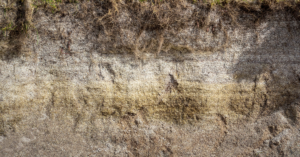 Correcting soil pH
Soil testing will also identify whether pH requires attention ahead of the next crop.
For most crops, a soil pH of around 6.0–7.0 provides favourable conditions for nutrient availability and plant growth. Outside of this range, nutrients can become less available to the crop even where adequate reserves are present in the soil.
Where soils are too acidic, lime applications can be used to neutralise acidity, raise pH and restore conditions for more effective nutrient uptake.
Routine lime applications should be avoided to reduce the risk of creating a soil that is too alkaline.
Evidence-led nutrient plans
Once soil condition and nutrient status are understood, results can be used to address deficiencies and build nutrient plans for the following months.
Where additional nitrogen is required, Sam Leadbeater, UK and Ireland sales manager at OCI Global, recommends applying sulphur alongside nitrogen for improved nitrogen use efficiency.
Sulphur plays an important role in nitrogen utilisation and protein formation, meaning supplying both nutrients together can help the crop make more efficient use of it.
OCI’s Dynamax supplies 27% nitrogen alongside 12,5% sulphur as SO3 (or 5% S) in each granule, providing an optimised ratio of both nutrients in one application.
Above all, this season is a reminder that dry soils are not necessarily damaged soils and nutrient requirements cannot be assumed.
Use the extra post-harvest time to assess first, then target cultivation and crop nutrition according to what each field actually needs.