



Maximising NUE during wetter months
With autumn crops establishing, the prospect of wetter weather later in the season makes retaining nitrogen and protecting soil fertility particularly important for the months ahead.
The Met Office has highlighted an increased risk of wet, unsettled conditions later this autumn and into early winter, influenced by a strengthening El Niño.
This could increase the risk of nitrogen losses, making efficient nitrogen management important for both current crop growth and future soil productivity.
Nitrogen’s role in soil fertility
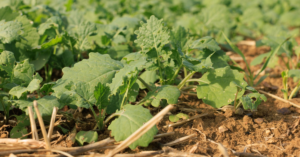 Nitrogen is essential for crop growth, supporting photosynthesis, protein production and root development.
Crops obtain nitrogen from several sources, including soil organic matter, organic manures, biological fixation by legumes and mineral fertiliser.
An adequate supply supports healthy crop growth and biomass production, which also contributes to soil fertility.
Roots and crop residues return organic material to the soil, where microorganisms break it down, helping to recycle nutrients and maintain soil organic matter.
This contributes to improved soil structure, water retention and nutrient cycling, supporting the conditions needed for future crop growth.
However, applying more nitrogen does not automatically improve this cycle. How effectively that nitrogen is used by a crop is the priority.
Managing nitrogen within the soil
Unlike more immobile nutrients like phosphorus and potassium, nitrogen continually changes within the soil, making it particularly challenging to manage.
As soil microorganisms convert ammonium into nitrate, nitrogen becomes more mobile and vulnerable to leaching, particularly when rainfall carries it below the rooting zone.
Autumn crops continue to take up nitrogen as they establish, but demand generally falls as temperatures drop and sunlight decreases, slowing growth towards winter.
Where nitrogen supply exceeds what the crop can use, surplus nitrate becomes vulnerable to leaching as winter rainfall carries it out of the soil.
Light, sandy soils are at particular risk due to their inability to hold onto moisture, allowing dissolved nitrate to be carried below the rooting zone.
Improving nitrogen use efficiency (NUE), which measures how effectively nitrogen inputs are converted into productive crop output, can help reduce these losses and make better use of available nutrients.
To learn more, read our blog on how to improve nitrogen use efficiency.
Optimising nitrogen uptake this autumn
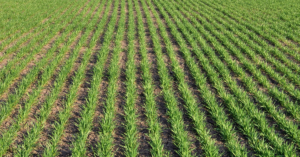 The priority this autumn is to assess existing nutrient supplies, identify any genuine crop requirements and avoid unnecessary applications ahead of wetter conditions.
- Assess crop demand: Winter cereals generally obtain sufficient nitrogen from the soil for autumn establishment, while other crops like oilseed rape can have greater autumn demand, depending on drilling date and crop development. Any additional nitrogen should be justified by crop requirements rather than applied routinely.
- Review soil nutrient supply: Use recent soil test results, previous cropping and organic manure records to inform nutrient decisions. Testing for pH, phosphate and potash can identify limitations to crop growth and nutrient uptake, while previous organic inputs and crop residues can contribute to the soil’s nitrogen supply.
- Target remaining applications: Where an autumn nitrogen requirement is identified, match application rates to crop demand and existing supply, considering variable rate applications where possible. Always avoid spreading ahead of heavy rainfall or on waterlogged soils.
- Protect soil structure: Avoid unnecessary trafficking or cultivation when soils are wet, as compaction can restrict rooting and increase the risk of waterlogging and nitrogen losses.
- Manage soil pH: Where soil tests identify acidic conditions, liming can improve nutrient availability and microbial activity, supporting more efficient nitrogen uptake. Although lime can be applied after drilling, applications should be planned around suitable ground conditions.
Together, these measures can help crops make better use of available nitrogen during wetter months, while reducing unnecessary inputs and protecting soil fertility ahead of winter.
To learn more, read our blog on the soil testing – the foundation of better nitrogen use efficiency.
Other nutrients can also influence good NUE. Sulphur, for example, is essential for producing the amino acids needed for protein synthesis.
Where sulphur is deficient, crops cannot make full use of the nitrogen they absorb, potentially limiting growth, yield and grain quality.
As both nutrients are required, choosing a fertiliser containing a balanced ratio of nitrogen and sulphur can help crops make more efficient use of applied nitrogen, supporting crop growth and yield potential.